You put money and time into painting your home, so seeing the finish peel away, bubble up, or fade out before its time is genuinely frustrating. If exterior paint peeling on Kansas City homes is something you’ve noticed on your own house, you’re not alone, and you’re right to want answers before investing in a new coat.
Exterior paint failure in Missouri is more common than many homeowners expect, and the reasons behind it say a lot about what a paint job actually needs to last. Here’s what every homeowner should know about exterior paint failure Missouri before deciding.
Key Takeaways: Exterior Paint Failure Missouri
Why Kansas City’s Climate Is Hard on Exterior Paint
Not every market is created equal when it comes to how long exterior paint holds up. Kansas City has a humid continental climate with about 42 inches of annual rainfall and around 15 inches of snow per year, with July highs averaging near 90°F with heavy humidity and January lows falling to about 22°F.
That kind of range from one season to the next puts ongoing stress on every painted surface on your home.
The real enemy here is not UV, it is water that freezes. Rain or snowmelt wicks into wood siding and masonry, then expands as it freezes overnight, lifting paint film off the substrate at the edges.
This is why exterior paint failure in Missouri often appears first along board edges, trim lines, and window frames rather than in the open field of a wall.
Summer humidity in the 70 percent range slows cure times and feeds mildew on shaded north walls, so quality jobs specify a mildewcide additive and a flexible 100 percent acrylic topcoat that moves with the freeze-thaw cycle instead of cracking.
The combination of hot, humid summers and cold, wet winters gives Kansas City a shorter reliable painting window than many other parts of the country.
Most exterior paints require surface temperatures above 50°F for proper curing and humidity below 85%, which limits the reliable painting window to mid-April through late October, with peak demand in May, June, and September.
The Most Common Causes of Exterior Paint Failure in Missouri
Moisture: The Number One Problem
Moisture is the number one cause of peeling exterior paint. When water gets behind paint, it breaks the bond between the surface and the coating.
Moisture reaches your paint film from multiple directions. Moisture from rain and snow, poor attic ventilation, overflowing gutters, or even misdirected sprinklers can cause peeling paint on your home’s exterior.
Water infiltrates the wood, causing the fibers to swell and stretch the paint film until it cracks. After it cracks, water continues to seep through, saturating the wood and breaking the paint bond, ultimately resulting in peeling paint.
Peeling edges, deteriorated caulk, cracks, and exposed areas can leave exterior materials more vulnerable during periods of rain and humidity. Pay particular attention to trim joints, siding transitions, and areas around windows and doors where deterioration may first become noticeable.
Interior moisture can also push outward. Inside the home, excessive moisture may come from high basement or foundation humidity, but cooking and humidifier use can also be to blame.
Outside the house, peeling can also result from inadequate caulking, clogged gutters, a leaky roof, or interior moisture that seeps through exterior walls.
Poor Surface Preparation
Peeling paint is rarely caused by bad paint. “It’s usually bad prep work,” according to painting professionals, and that holds whether the last painter was a weekend DIY attempt or a contractor who cut corners on time.
According to Family Handyman, “the most common and biggest mistake” seen on painting projects is lack of preparation. “Most people just want to start painting, but everything needs to be washed and cleaned first. Even before you start taping off areas, you must always make sure the area to be painted is clean, dry, dull, and sound.”
Painting over dirt, mildew, chalky residue, or failing old paint prevents the new coating from bonding properly. Painting over loose or blistered coating without removing weak material means the new finish can fail in the same pattern because the adhesion problem remains.
Skipping or using the wrong primer compounds this problem. Because exterior paint jobs need extra lasting power to stand up to the elements, using a suitable primer is particularly important. Painting directly onto some surfaces, like wood, without primer can lead to cracking and peeling.
Low-Quality Paint and Wrong Product Selection
The coating itself matters as much as the preparation underneath it. Cheap or incorrect paint can fail quickly when exposed to Midwest weather. Budget paint often lacks the flexibility and durability needed to expand and contract with temperature changes.
High-quality exterior paint should offer strong adhesion to siding and trim, resistance to moisture and mildew, flexibility during freeze-thaw cycles, and UV protection to prevent fading and cracking.
Sunlight is relentless. Ultraviolet rays break down the binders in paint over time, causing fading, chalking, and brittleness. Dark or vibrant colors fade fastest, especially on south- and west-facing surfaces.
This Old House notes that acrylics offer superior durability, flexibility, and color retention compared to other formulations. These paints are breathable, allowing moisture to escape, which helps prevent peeling and blistering.
Lower-end paints simply don’t hold up in a climate like Kansas City’s. Lower-end, cheaper exterior paints can fade in as little as 2 to 3 years, especially darker colors. That’s not a paint job; that’s a short-term cover-up.
Application Errors and Wrong Conditions
Even a quality product fails when it goes on under the wrong conditions. Painting in high temperatures or direct sun is problematic. “You can get the same bubbling, cracking, and peeling.”
When a liquid coating is applied to a hot surface in direct sunlight, the top layer dries almost instantly, trapping moisture and solvents underneath. As those trapped gases try to escape from the heat, they form bubbles and blisters in the finish.
Cold conditions are equally damaging. “If it’s too cold, the liquids in the paint freeze before it has a chance to cure. As it tries to dry, the paint will crack or peel.”
Rushing between coats is another way a paint job fails prematurely. Applying paint too thinly or too thickly leads to problems such as cracking and peeling. Failing to allow sufficient drying time between coats often compromises the paint’s integrity, causing premature failure.
Too Many Old Layers
Homes that have been painted many times over the years carry a specific risk. Over time, multiple layers of old paint build up on siding. Eventually, the weight and thickness of these layers cause cracking and separation.
When this happens, new paint cannot bond properly, cracks form between layers, and peeling spreads across large sections. This is one reason a proper exterior project isn’t just about applying new paint over whatever’s there.
An experienced contractor evaluates the existing coating condition first and determines whether removal or additional preparation is needed before anything new goes on.
What Exterior Paint Failure Actually Looks Like
Exterior paint failure in Missouri doesn’t always start with large sheets of paint falling off. More often it begins with smaller signs that are easy to dismiss:
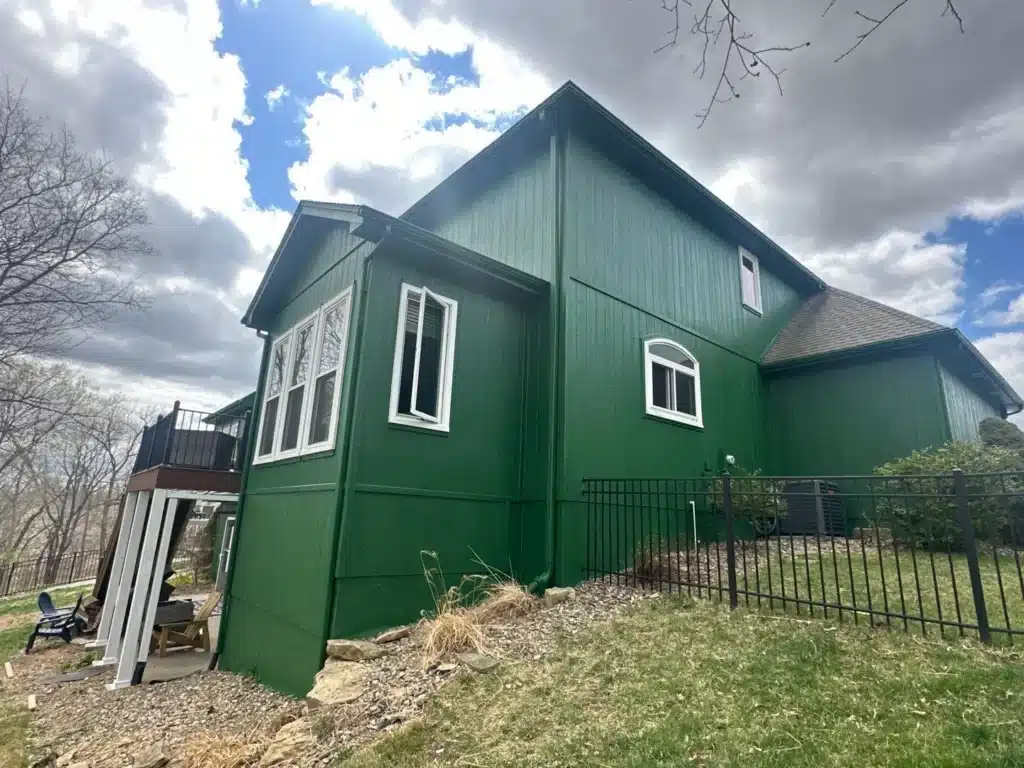
Peeling and flaking, Paint that curls away from the surface, especially along trim lines, window frames, or anywhere moisture can collect. Once peeling begins, the exposed substrate is left vulnerable to moisture absorption, rot, and mold growth. The longer peeling is ignored, the faster structural damage develops.
Bubbling and blistering, Blisters or bubbles appear when a layer of paint does not adhere perfectly to its underlying surface. As the new film of paint dries and pulls away, pockets of air or water form underneath.
Some deflate or pop on their own, making the uneven surface less noticeable, though the blistered areas may never fully reattach to the substrate and later begin to peel.
Fading and chalking, If paint leaves a powdery residue on your hand, it’s breaking down too fast. This chalking is a sign of low-quality paint or improper application. Fading is natural over time, but there’s a difference between gradual color relief and rapid, uneven fading, which signals that the paint’s UV-resistant additives have broken down.
Cracking, Cracking and flaking can result from low-quality or excessively thinned paint, poor surface preparation, or latex that dried too fast in cool temperatures or high wind.
If paint failure is worse on one side of the house, that’s useful information. Sun exposure, rainfall splash patterns, and nearby landscaping can all influence where peeling and blisters start.
Why Painting Over Failing Paint Never Works
One of the most common mistakes homeowners and inexperienced painters make is painting straight over failing coatings without addressing what caused the failure.
The best next step when paint is peeling, blistering, or fading is to identify why it is failing before repainting. Start by checking for loose paint, trapped moisture, and areas where water can reach the wall or trim.
New paint applied over old failing paint may look acceptable for a short time, but it will fail in the same spots and often sooner. Proper surface preparation is the foundation of a long-lasting paint job.
This includes cleaning the surface thoroughly, repairing any damage, and priming when necessary. Paint adheres best to clean, dry surfaces.
Unaddressed caulking failures are a particularly common source of repeat problems. Applying a good-quality acrylic latex caulk around doors, windows, and other imperfections such as cracks and holes is a step that blocks water from ruining the finished product.
How Long Should Exterior Paint Last in Missouri?
On average, a quality exterior paint job lasts about 7 to 10 years. But many factors influence that duration, climate, surface type, preparation, and the quality of the products all play a role.
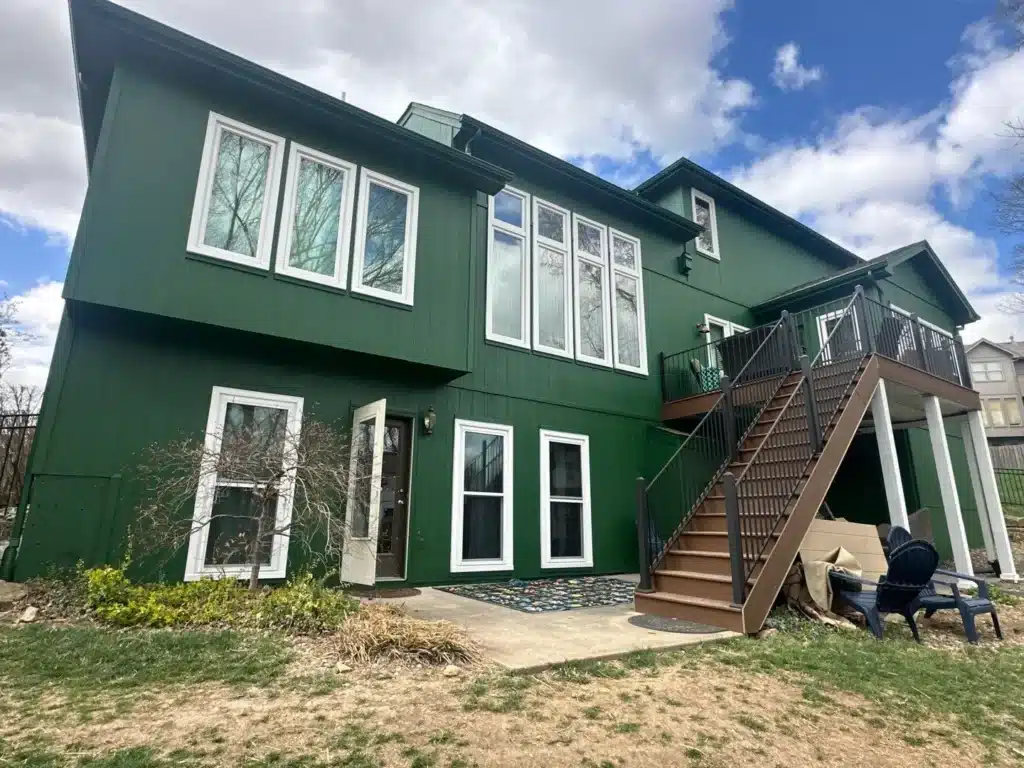
Lifespan also varies by material. Wood siding tends to need repainting sooner than fiber cement or masonry. DIY painting can seem like a budget saver, but skipping prep steps often cuts lifespan in half. Without professional surface preparation, high-grade primers, and commercial tools, most DIY jobs last only 3 to 5 years.
In a market with Kansas City’s weather demands, choosing the right products and applying them correctly is what separates a coating that holds up season after season from one that shows problems after the first winter.
What a Properly Done Exterior Should Include
Any exterior project designed to resist Missouri’s weather and avoid premature exterior paint failure should account for:
Each of these steps is part of what DC Painting KC covers on every exterior project in Pleasant Hill, Raymore, Lee’s Summit, Blue Springs, Belton, and the surrounding south Kansas City communities.
With more than 22 years of hands-on trade experience and over 1,200 completed projects, the team approaches every exterior as a preparation project first, because the finish coat only performs as well as what’s underneath it.
The process starts with a thorough inspection and honest assessment, a detailed proposal that clearly outlines scope and expectations, and daily communication throughout so homeowners always know what’s happening and what comes next. That’s paired with the No-Surprise Guarantee: what’s quoted is what you pay.
Getting Ahead of Exterior Paint Failure
The best time to address exterior paint failure in Missouri is before it spreads. Small areas of peeling or a few soft blisters near a window frame can be repaired as part of an exterior project. Left alone through another Kansas City winter, those same spots often grow into larger sections of failed coating, exposed wood, and in some cases early wood rot.
If you see fading that looks uneven, paint that’s starting to lift at the edges, or bubbling anywhere on your home’s exterior, those are the right signals to schedule a professional evaluation.
A thorough walkthrough can determine whether the failure is surface-level or points to a moisture or substrate issue that needs to be addressed before new paint goes on.
Ready to stop watching your exterior paint fail and start with a finish that’s built to hold up? DC Painting KC provides free consultations and detailed proposals for exterior painting in Pleasant Hill, Raymore, Lee’s Summit, Blue Springs, Belton, and throughout south Kansas City.
Schedule your free consultation and get a clear plan for protecting your home. Call us at 816-451-4882 today.